Consistent Oversight Across the Five UK Care Regulators
The regulator's name changes what a role is called and which reference codes apply. It should not change how seriously an organisation tracks its own governance.
Terminology differs; the discipline does not
Each regulator describes senior accountability in its own words. In England, CQC requires a Nominated Individual; Ofsted's children's homes regulations use a Responsible Individual, as do CIW in Wales and RQIA in Northern Ireland. In Scotland, the Care Inspectorate registers the provider without requiring a separately named individual of this kind; the provider's leadership carries the duty to oversee quality.
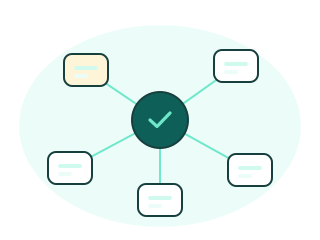
Treating the governance discipline as universal, and only the terminology as regulator-specific, keeps a group that answers to more than one regulator from maintaining five different processes. The same issue lifecycle, evidence linking, and inspection readiness workflow apply whichever regulator a service answers to; only the labels and reference codes adapt.
Not every regulator mapping should be trusted equally on day one
CQC and Ofsted terminology and reference-code mappings have had the most scrutiny and are treated as verified. CIW, Care Inspectorate, and RQIA mappings are live and usable today, but they're flagged as pending final compliance sign-off — we're not presenting them as equally certain yet.
Being explicit about that difference is deliberate. A provider relying on a reference code for a live governance decision should know whether that mapping has been fully verified or is still being finalised, not simply assume the same level of certainty applies across all five regulators.
Groups spanning nations need one dashboard, not five
A care group with services in England, Wales, Scotland, and Northern Ireland has historically had to reconcile different regulatory language manually before a group-level view meant anything. A single dashboard that already understands each regulator's terminology removes that translation step.
A director or group NI can then look at cross-service patterns directly, instead of first normalising four different regulatory vocabularies by hand before the comparison even starts.
Previous
Building Audit Templates That Match How You Actually Inspect
Next
Admin Security Controls Most Providers Only Think About After an Incident